7 Hidden London Underground Scenes to Explore

Below London's landmarks lies a secret underworld, packed with historic wartime tunnels that are frozen in time to the electric buzzingly club scene. A hidden London underground awaits you with stories and sights most visitors walk straight over. We’re letting you in on the secret, sharing with you 7 hidden London underground surprises waiting in the dark, and how to reach them.



Highlights


Discover 7 ways to experience London's hidden underground
Uncover ghost stations, wartime shelters, music, street art and LGBTQ+ culture
Find the closet landmark so you can plan your visit via our bus tours

What Makes London's Hidden Underworld So Fascinating?
It’s not just the London Underground (Tube) that’s beneath your feet. It’s a whole enchanting world of mystery, excitement and secrecy.
Its abandoned stations are sealed behind locked doors. Its wartime bunkers that sheltered thousands during the Blitz. It's warehouse clubs beneath railway arches, graffiti-covered streets and music scenes that shape real British culture.
Below are seven ways to experience London's hidden underground scene, from the hidden tunnels beneath your feet to the creative communities that locals love.
1. Hidden Underground London Tube Stations
Did you know London has 40 disused Underground stations?
Some closed because they weren’t being utilised. Others disappeared as new lines and bigger interchanges took over. So although they're no longer marked on modern Tube maps, many still survive beneath the city.
Picture it, unused ghostly quiet stations complete with original platforms, tiled passageways and vintage advertising posters. It’s only natural rumours of ghosts started to form.
One of the most famous is Aldwych Station, which closed in 1994 after almost 90 years of service. Today it welcomes visitors who seek a true London hidden underground tour by stepping back in time to a disused station with a century of stories to tell, led by an expert guide.
You may have even seen it before as it regularly appears in films and television series including Atonement, Sherlock and Darkest Hour. More iconic famous London spots can be found here.
The only way to explore most of London's hidden stations is on an official Hidden London Tour, operated by the London Transport Museum.
Tours visit locations including Aldwych, Down Street, Baker Street, Charing Cross and Dover Street, although availability changes throughout the year. Because group sizes are limited, tickets often sell out weeks in advance.
Closest landmark: Covent Garden
2. Secret Wartime Tunnels & Shelters
When the Second World War reached London, the Underground became far more than a transport network. Stations doubled as bomb shelters, while secret tunnels beneath the city were converted into military headquarters.
Down Street Station, tucked beneath Mayfair, became Winston Churchill's hidden railway bunker during the Blitz. Complete with offices, meeting rooms and even a bathroom for the Prime Minister, it helped coordinate Britain's wartime response while bombs fell overhead.
Further south, Clapham South Deep-Level Shelter was built 180 steps below ground and could protect up to 8,000 people during air raids. After the war, it welcomed Caribbean migrants arriving on the Empire Windrush before later becoming budget accommodation for visitors to London.
Today, both these hidden London spaces can be explored via guided tours run by the London Transport Museum.
Closest landmark: Hyde Park Corner (Down Street) and Clapham Common (Clapham South)
3. Camden & Soho — Where Punk Changed Britain
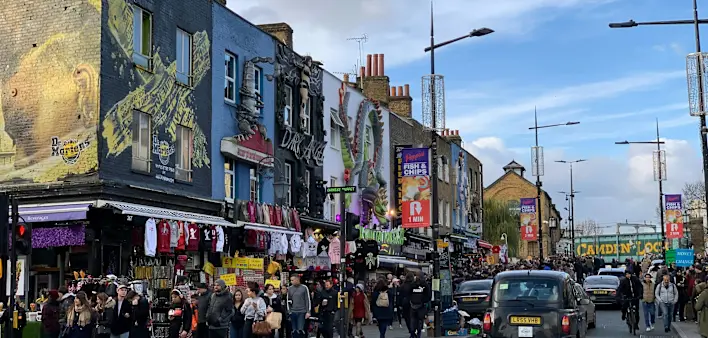
London's hidden underground culture isn't only beneath the streets. It's also the birthplace of some of Britain's biggest cultural movements… punk.
During the 1970s, Soho and Camden became the heart of the UK's punk scene. Bands including The Clash, Sex Pistols and The Damned performed in small venues that helped launch a musical revolution. Punk wasn't limited to just the music, it transformed fashion, politics and youth culture, with leather jackets, DIY style and anti-establishment attitudes becoming part of London's identity. Think Vivenne Westwood.
Today Camden still embraces its alternative roots. To feel the punk experience, head to Camden to visit independent music venues, record shops and the famous Camden Market. Or stop off at Soho for intimate live music bars where you won’t recognise the artists name but definitely discover someone new as artists continue to emerge.
Closest landmark: Camden Market or Soho
4. The Underground Club & Electronic Music Scene
Few cities have influenced electronic music like London.
From the late 1980s onwards, warehouse parties and railway arches became home to genres including jungle, drum & bass, UK garage, grime and dubstep. Many of these sounds were born in pirate radio stations, underground clubs and grassroots music communities before becoming global phenomena.
Today London's nightlife continues to evolve through legendary venues such as Fabric, Corsica Studios and FOLD, alongside independent warehouse events that keep the city's underground spirit alive. Whether you're discovering world-famous DJs or tomorrow's emerging artists, London's club scene remains one of the most influential anywhere in the world.
It's loud, creative and constantly reinventing itself, exactly what London’s hidden underground culture has always been about. Head to the venue’s websites to see what’s coming up.
Closest landmark: Farringdon (Fabric) or Elephant & Castle (Corsica Studios)
5. Shoreditch's Street Art Underground
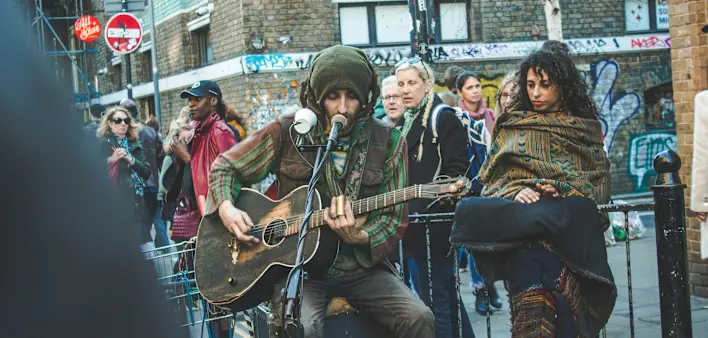
London's hidden underground culture also can be found in the streets of Shoreditch.
The streets around Shoreditch and Brick Lane have become one of Europe's largest open-air galleries, where murals appear, disappear and evolve almost overnight. International artists including Banksy, ROA, Stik and countless local creatives have all left their mark across the neighbourhood.
Unlike traditional galleries, the artwork constantly changes. A wall that looks one way today could feature an entirely new mural next month, making every visit different.
Street art has become one of the defining expressions of hidden London's underground culture and is not one to miss.
Closest landmark: Brick Lane or Spitalfields Market
6. London's LGBTQ+ Underground Culture
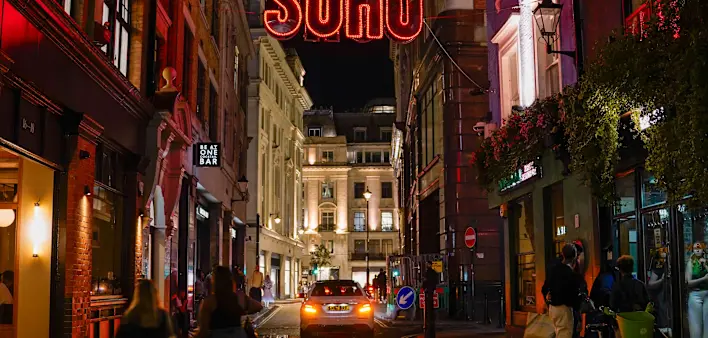
For decades, London's underground venues have given LGBTQ+ communities places to safely gather, perform and express themselves.
Soho has been the historic heart of London's LGBTQ+ community for decades, home to iconic bars, theatres and cabaret venues that helped shape the city's nightlife. More recently, independent queer collectives across East London have expanded that legacy through club nights, drag performances, live music and experimental arts events.
The underground scene is known for its creativity as much as its nightlife, bringing together musicians, performers, artists and activists in spaces that celebrate diversity and self-expression.
Today Soho remains one of the most vibrant and influential places in Europe for LGBTQ+ communities to come together.
Closest landmark: Soho
7. London’s Hidden Underground Bars
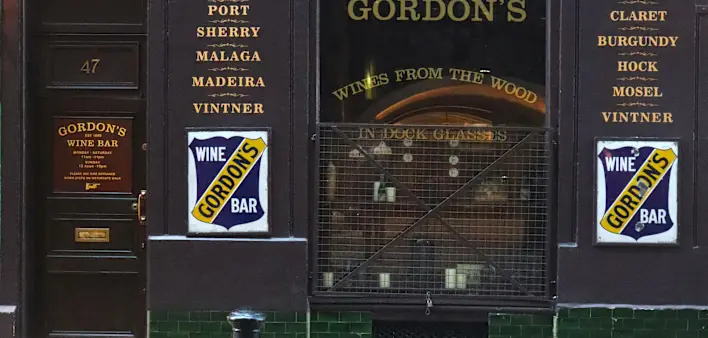
London's underground scene extends to its bars too. Hidden behind unmarked doors, beneath old buildings or inside former railway arches, the city is packed with atmospheric drinking spots that reward those willing to look a little harder.
Cahoots, inspired by a 1940s Underground station, recreates Blitz-era London with vintage Tube carriages and period cocktails.
Nightjar channels the glamour of a Prohibition-era speakeasy,
Gordon's Wine Bar, dating back to 1890, serves drinks inside candlelit vaulted cellars believed to be among the oldest wine caves in London.
Closest landmark: Piccadilly Circus (Cahoots) or Embankment (Gordon's Wine Bar)
How Do You Experience London's Hidden Underground Scene?
Exploring London's hidden underground scene is easier than you might think. Our Hop-On Hop-Off bus tour links many of the city's best-known landmarks, putting these hidden experiences within easy reach before you head below the streets.
Near Covent Garden (Hidden London Tours, including Aldwych)
Near Hyde Park Corner (Down Street Station)
Near Clapham Common (Clapham South Deep-Level Shelter)
Near Camden Market (London's punk music scene)
Near Farringdon (Fabric and London's underground club scene)
Near Brick Lane (Shoreditch street art)
Near Soho (London's LGBTQ+ culture)
It's a flexible way to experience both sides of London, the famous landmarks above ground and the hidden stories, music and culture below.
5 min read
Related Articles

10 Hidden Gems in London Most Miss
The Real London · 5 min read
8 Unusual Museums in London Most People Miss
The Real London · 5 min read